

EMOTIONAL INTELLIGENCE FOR LEADERS
The Strategic Value of Combining Emotional Intelligence with Social Styles
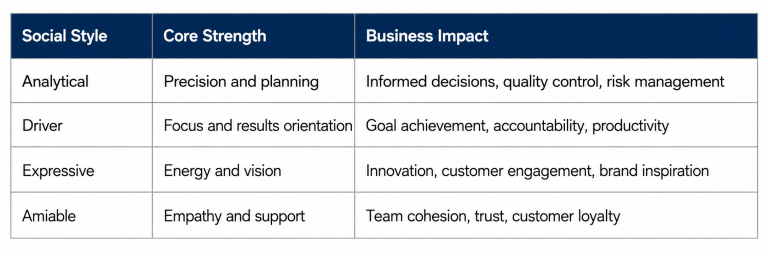
Emotional Intelligence training helps leaders go beyond simply recognizing social styles by teaching them how to balance care and accountability in a way each style can actually receive. Drivers respond to clear expectations, Expressives to encouragement, Amiables to supportive connection, and Analyticals to clarity and structure. When leaders adapt both their communication and their balance of kindness and standards to each style, they build trust faster, strengthen relationships, and create teams where people feel valued, understood, and motivated to perform. This is how socialstyle awareness becomes real leadership impact.
Stress Hardiness & Emotional Resilience
Stress hardiness and emotional resilience are essential because leaders can only adapt their balance of care and accountability—and adjust to different social styles—when they can stay steady under pressure. Resilient leaders think clearly, communicate intentionally, and respond rather than react, even when situations are tense or fast moving. This emotional steadiness allows them to meet Drivers with clarity, Expressives with encouragement, Amiables with support, and Analyticals with structure. When leaders manage their own stress well, they create psychological safety for others, make fairer decisions, and build teams that trust them. In short, resilience is what makes social style adaptability sustainable and effective.
The Cost of Neglect
When leaders fail to combine emotional intelligence with social style adaptability, the cost is immediate and measurable: miscommunication rises, trust erodes, stress escalates, and performance drops. Teams feel misunderstood, unsupported, or unfairly managed—leading to disengagement and turnover. But when leaders learn to balance care and accountability in ways each social style can relate to—and develop the emotional resilience to stay steady under pressure—the return on investment is profound. Communication becomes clearer, relationships strengthen, decisions improve, and teams feel both valued and motivated. The result is a workplace where people perform at their best because they genuinely trust their leader and feel they belong.